AI is quietly reshaping the way dump truck fleets operate, but not in the way most headlines suggest. When we talk about how AI is changing dump truck dispatching, it’s not about robots taking over the driver’s seat or fully automated job sites. It’s about small, behind-the-scenes tools that are already helping local haulers work smarter.
Today, most of the real impact comes from telematics, GPS, and routing tools that use limited AI to support tasks like identifying driver behavior, showing traffic patterns, or even extracting data from paper tickets.
In this post, we’ll cover what’s working now, what’s still in development, and how these early AI tools are quietly improving everyday tasks across all around trucking.
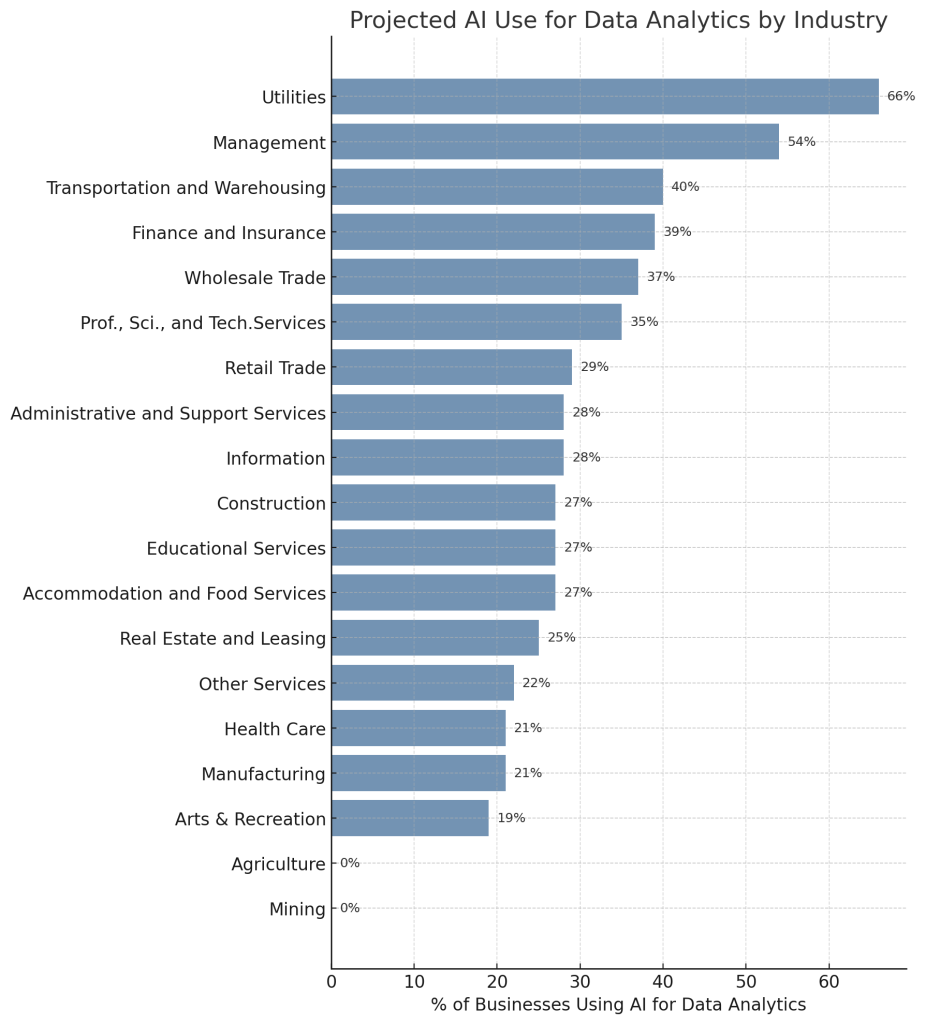
Projected AI Use for Data Analytics by Industry
Among the most practical ways AI is changing dump truck dispatching today is through data analytics, but not in the flashy, futuristic sense. Instead, we’re seeing steady improvements in how data gets collected, organized, and used to support dispatch decisions.
A projection by the North Carolina Department of Commerce Labor & Economic Analysis Division shows that nearly 40% of transportation and warehousing businesses plan to use AI for data analytics, putting the industry among the top adopters in this area.
Smarter Dispatch Tools Are Evolving
Dispatch still runs on human experience, but the tools supporting it are getting sharper. While some platforms use custom logic instead of AI, they’re making it easier to organize loads, assign jobs faster, and reduce overlaps in scheduling.
Today’s dispatching software can highlight:
- Which trucks are free based on real-time status
- Data pulled from load tickets to streamline billing or reporting
- How quoting, order intake, and job scheduling align in one easy-to-use system
- How to rebalance workloads without scrambling the schedule
- Real-time dashboards and revenue reports make it easy to see how your fleet is doing
On the communication side of dispatching, real-time updates between dispatchers and drivers are helping reduce missed loads, delays, and check-in calls. It’s one of the quieter ways trucking technology is improving daily job flow across all around trucking.
As more data gets built into these platforms, the shift toward AI trucking will happen gradually. Even now, smarter tools are creating small wins that stack up over time.
AI-Assisted Tools Already at Work in Dump Truck Operations
AI trucking technology today is more about structure than automation. These tools are already supporting day-to-day tasks in local fleet trucking companies:
- Telematics systems use basic AI to track driver behavior, flagging things like speeding, harsh braking, and sudden turns.
- Driver-facing cameras now detect signs of drowsiness or distraction in real time, alerting drivers and logging incidents for safety review.
- Smart maps and GPS tools offer real-time rerouting during traffic jams or road closures, helping reduce downtime and fuel costs.
- Data pulled from load tickets to streamline billing or reporting
- Lead-sourcing tools use AI to sort through market data and search for potential job opportunities or partnerships.
While many of these systems still rely on custom logic rather than advanced machine learning, they’re a step toward the future of AI in all-around trucking, where decisions are backed by solid data, not guesswork.
As AI trucking continues to evolve, we’ll likely see more of these features expand and be integrated into daily operations. For now, it’s these smart tools that are helping move all around trucking forward—one decision at a time.
Why It Matters for Local Fleets Right Now
While most systems don’t use full-scale artificial intelligence, they’re using smarter logic, cleaner data, and faster processing to support better decisions. From real-time GPS updates to dashboards that show load status and truck availability, these small upgrades are helping reduce delays, improve quoting, and minimize dispatch confusion.
If you’re still relying on spreadsheets, disconnected ticketing, or guesswork to schedule jobs, you might be falling behind. The trucking industry trends we’re seeing now point to more data-driven systems and fewer avoidable mistakes.
Curious what that might look like in your operation?
Schedule a FREE demo—we can walk you through how smarter tools can help your dump truck business stay competitive in a changing market.