Driver Performance Analytics for Dump Truck Fleets

Driver performance analytics combines telematics signals—such as speeding, harsh braking, rapid acceleration, idling, and route exceptions—with dispatch and job data. For dump truck fleets, the goal is not to rank drivers for its own sake. It is to identify repeatable safety, fuel, compliance, and productivity issues and coach with specific operating context.
Schedule Demo
Dump Truck Dispatcher driver app dispatch screen

Data model

Four layers make driver analytics useful

Vehicle and behavior signals

Events from the GPS, ELD, dashcam, or telematics provider.
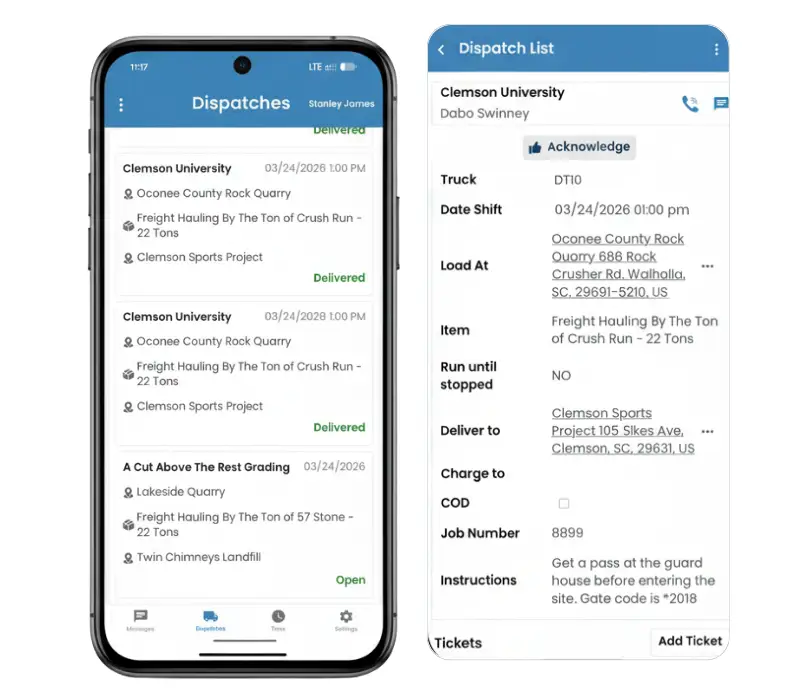
Dispatch context

The assigned job, route, instructions, truck, driver, and load status.

Work records

Clock time, tickets, delivery status, pay, maintenance, and revenue.

Coaching follow-through

A documented conversation, target behavior, review period, and trend.

Metrics

What to monitor—and how to read it

Harsh braking and acceleration

Review patterns, not isolated events. A sudden brake may be defensive; repeated events on similar routes are more useful for coaching and maintenance review.

Speeding

Use the telematics provider’s threshold and road context. Compare recurring events with route, job timing, and dispatch instructions.

Idling

Long idle periods may point to driver habits, plant queues, jobsite congestion, required warm-up, or a scheduling gap.

Route adherence

A route exception can mean a missed turn, closure, personal stop, or better local route. Review the assignment before deciding.

Job and load progress

Acknowledged, loaded, delivered, and complete statuses help separate a location issue from a process or communication issue.

Outcomes

Turn the data into an operating decision

Safety

Use recurring behavior patterns to select one focused coaching topic, explain the risk, and check the next trend period.

Fuel use

Pair idle, acceleration, and route trends with jobsite and dispatch context before changing a route or coaching a driver.

Compliance

Use consistent thresholds, documented follow-up, and current driver and vehicle requirements.

Productivity

Combine route and idle data with load status, jobsite wait, truck availability, maintenance, and revenue context.

Coaching workflow

A practical review process

1

Choose a focused metric

Select one or two measures tied to a real safety, fuel, or productivity goal.
2

Set the threshold

Define the event in the connected telematics platform and explain it to drivers.
3

Build the baseline

Review several weeks of data before deciding what normal looks like.
4

Add operating context

Check the job, route, traffic, site, truck, and dispatch instructions.
5

Coach one behavior

Discuss a specific example and agree on one measurable change.
6

Recheck and recognize

Review on a consistent schedule and recognize improvement, not only exceptions.

Product role

What Dump Truck Dispatcher contributes

Dump Truck Dispatcher provides the operating record around connected telematics data: assignments, driver communication, clock time, load status, digital tickets, revenue by driver and truck, compliance status, and maintenance information. That context moves the conversation from “an event happened” to “here is what happened on this job and what we should change.”

Frequently Asked Questions

What is driver performance analytics?

Driver performance analytics is the structured review of driving, vehicle, route, and job data to identify safety, fuel, compliance, and productivity patterns. The most useful analysis combines telematics events with operating context.

Does Dump Truck Dispatcher detect harsh braking and speeding?

Those events are typically generated by a connected GPS, ELD, dashcam, or telematics provider. Dump Truck Dispatcher supplies dispatch, job, ticket, driver, truck, and revenue context around the work.

How often should driver performance be reviewed?

Use a consistent period long enough to reveal patterns—often weekly for active exceptions and monthly for coaching trends. Avoid judging a driver from one isolated event.

Are driver scorecards fair?

They can be fair when thresholds are documented, context is reviewed, drivers can discuss exceptions, and the same process is applied consistently. A raw ranking without context is not a complete performance review.

See fleet visibility in the context of your dispatch workflow

Walk through your scheduling, driver communication, ticket, billing, and tracking requirements with the Dump Truck Dispatcher team.

Schedule Demo